Sony FX5 vs. Our FX3: What the Upgrade Actually Changes
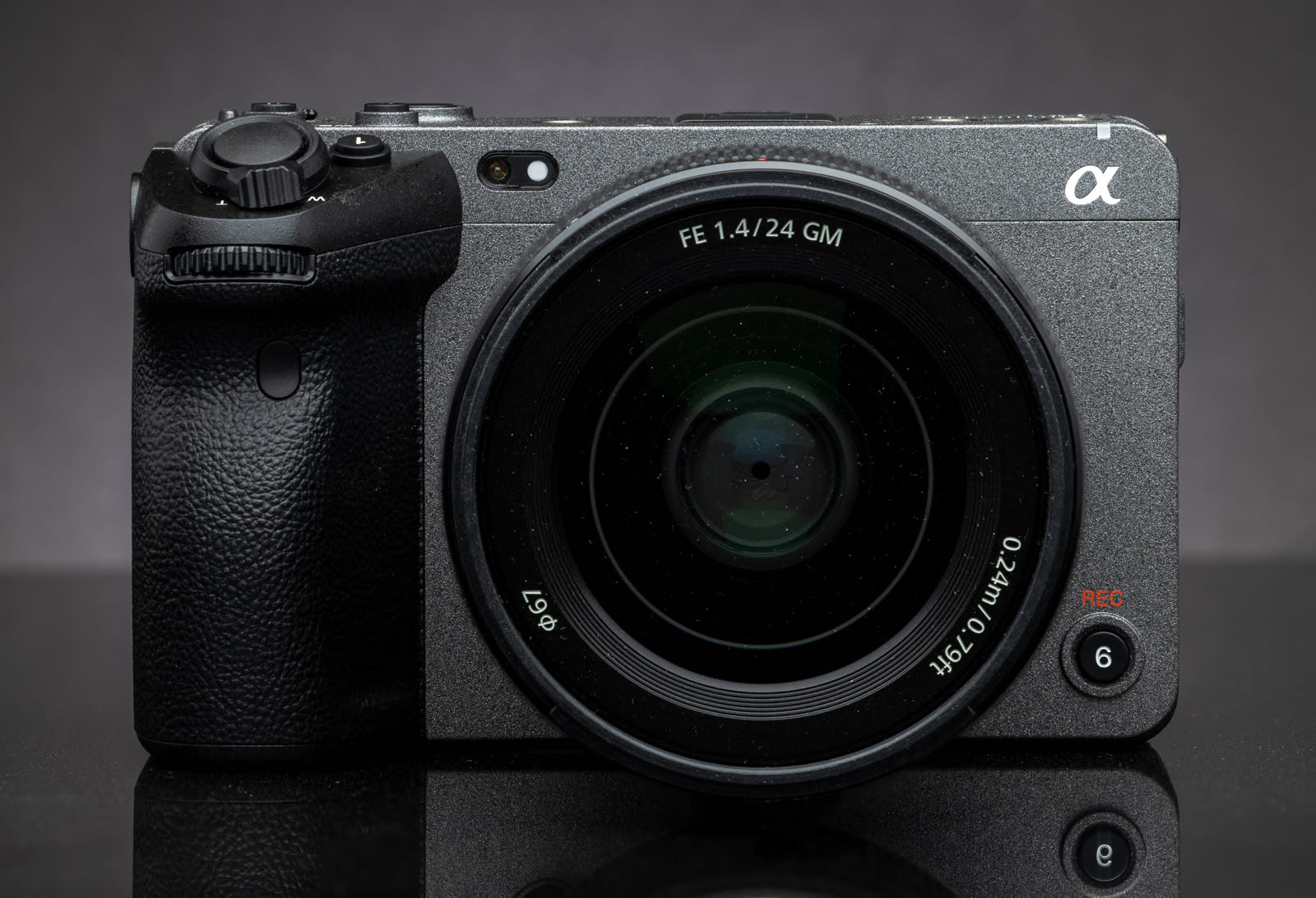
The Sony FX3 — our in-house workhorse. Photo: Henry Söderlund.jpg), CC BY 2.0 (resized).
Sony just dropped the FX5 — announced July 23, 2026, shipping mid-August. It's the newest camera in their Cinema Line, and it slots right above the camera we shoot on every day: the FX3.
The FX3 has been our in-house workhorse for a long time. Music videos, founder films, athletes, run-and-gun, low light — it's earned its place. So when a new body shows up promising to be the next step up, I don't get caught up in the spec-sheet hype. I ask one question: what does this actually change on a real shoot?
Here's my honest take, camera-to-camera.
First — respect to the FX3
Let's be clear about why the FX3 has been so hard to beat. Twelve megapixels sounds "small" on paper, but those are big, clean pixels on a full-frame sensor — which is exactly why it eats low light for breakfast. It shoots 4K up to 120fps internally, has dual base ISO, over 15 stops of dynamic range in S-Log3, a built-in cooling fan so it doesn't overheat mid-take, and a body small enough to live on a gimbal all day. It's a filmmaker's camera, not a spec-sheet camera. That's the whole point.
So the FX5 isn't fixing something that was broken. It's answering a few specific things I've wished for on specific kinds of shoots.
What's genuinely new on the FX5
Four things actually move the needle here — and none of them are "more megapixels for the sake of it."
1. A stacked sensor (goodbye, rolling shutter)
The FX3's sensor is back-illuminated but not stacked. The FX5 uses a new fully stacked 16.6MP sensor, which reads out way faster. In plain terms: less rolling shutter. Fast whip pans, a hand flying across the frame in a music video, an athlete cutting hard — the skew and "jello" you sometimes fight in post gets dramatically reduced. For the kinetic way we shoot hip-hop and sports, that's real.
2. A third base ISO at 4000
The FX3 gives you two clean starting points: ISO 800 and 12800. The FX5 adds a third base ISO at 4000 (plus a Dual Gain mode). That middle rung matters more than it sounds. A lot of the rooms we shoot in — venues, night exteriors, dim studios — live right in that gap where 800 is too dark and 12800 is more than you need. A native 4000 means cleaner images in exactly the lighting hip-hop and event work throws at you.
3. Internal RAW — no external recorder rig
This is the big one for me. On the FX3, if you want RAW you're running a 16-bit signal out over HDMI into an external recorder, and even then it caps at 60p. The FX5 records X-OCN RAW internally — a first for the FX line. That means the grading latitude of RAW with none of the cage-and-cables baggage. I grade heavy (Dehancer and custom looks are half our signature), and having that headroom straight to the card, on a body I can still throw on a gimbal, changes what's possible on a fast day.
4. 5K Open Gate — shoot once, deliver everywhere
The FX3 tops out at 4K with no open-gate mode. The FX5 shoots 5K in 3:2 Open Gate, using the full sensor. Practically: one take gives me the horizontal edit and the vertical reframe for Reels/TikTok, with resolution to spare for punch-ins. For clients who need a cinematic hero cut plus a month of social clips from the same shoot day, that's less time, more deliverables.
On top of that, the FX5 adds a dedicated AI processing unit (sharper autofocus and subject tracking) and an optional detachable OLED viewfinder — something the FX3 never had, which helps a lot shooting in bright daylight.
The spec sheet, side by side
- Sensor Sony FX3 (our in-house): 12.1MP full-frame, back-illuminated (non-stacked) · Sony FX5 (2026): 16.6MP full-frame, fully stacked
- Processor Sony FX3 (our in-house): BIONZ XR · Sony FX5 (2026): BIONZ XR2 + dedicated AI unit
- Max resolution Sony FX3 (our in-house): 4K (UHD/DCI) · Sony FX5 (2026): 5K, 3:2 Open Gate
- Frame rates Sony FX3 (our in-house): 4K up to 120p · FHD up to 240p · Sony FX5 (2026): 5K up to 60p · 4K up to 120p · FHD up to 240p
- Internal RAW Sony FX3 (our in-house): No (16-bit RAW via HDMI only, capped at 60p) · Sony FX5 (2026): Yes — X-OCN RAW internally
- Base ISO Sony FX3 (our in-house): 800 / 12800 · Sony FX5 (2026): 800 / 4000 / 12800 + Dual Gain
- Dynamic range Sony FX3 (our in-house): 15+ stops (S-Log3) · Sony FX5 (2026): 15+ stops (S-Log3)
- Viewfinder Sony FX3 (our in-house): None · Sony FX5 (2026): Optional detachable OLED EVF
- Audio handle Sony FX3 (our in-house): XLR top handle included · Sony FX5 (2026): Optional XLR handle (96kHz / 32-bit float)
- Body price Sony FX3 (our in-house): ~$3,900 · Sony FX5 (2026): $4,899 (body) · $5,499 with XLR handle
So — are we upgrading?
Honest answer: the FX3 isn't going anywhere. It's still one of the best filmmaking tools ever made at its size, and for a huge chunk of the work we do, the footage that comes off it is already exactly what the story needs. Nobody has ever watched one of our films and thought "this needed a stacked sensor."
But the FX5 is a genuine step up in the three areas that actually matter to our work: low-light cleanliness, RAW grading latitude, and one-shoot-many-formats delivery. That's a music-video-and-live-event camera. That's a sports-and-athlete camera. That's the camera you want when the room is dark, the movement is fast, and the client needs a hero cut plus thirty clips by Friday.
My take: the FX5 doesn't replace the FX3 — it pairs with it. A-cam and B-cam, or the right tool for the right shoot. The gear was never the point anyway. It just widens what we can pull off without getting in the way of the story.
Because here's the thing I always come back to: the camera is the easy part. A stacked sensor won't make a nervous founder comfortable on camera. Internal RAW won't find the moment an artist actually comes alive. That's still on us — the eye, the direction, the trust in the room. New gear just means fewer compromises getting there.
Better tools don't make better films. They just get out of the way faster.
We'll be putting the FX5 to work. If you want to see what that looks like on your project — a brand film, a music video, athlete content, whatever you're building — let's talk.
Great footage starts with the right eye — not the newest body.
Every project starts with a conversation. Tell Eric what you're building.
Your story deserves the right eye.
Every project starts with a conversation. Tell Eric what you're building.
Start Your Vision